Ecosystem-Based Restoration Approach for Nyungwe-Ruhango Corridor Project

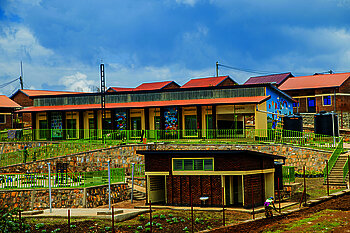
The Ecosystem-Based Restoration Approach for the Nyungwe–Ruhango Corridor Project is a GEF-8–financed project implemented by the Government of Rwanda through REMA, with support from the World Bank. The project will run for five years, from July 2025 to May 2030. The project aims to restore priority ecosystems and promote sustainable landscape management in targeted areas of the Nyungwe–Ruhango Corridor, covering parts of Ruhango, Nyanza, and Nyamagabe districts. It focuses on reversing ecosystem degradation while strengthening climate resilience and improving livelihoods for local communities

Investment

9,110,100 USD

Duration

5 Years (2025-2030)

Status

Ongoing

Project Team

Project Manager

Jean Bosco Mugwaneza

Location

RDB New Building (KG 9 Ave), 2nd floor

Email

bmugwaneza@rema.gov.rw

Phone

+250 788613723

ENVIRONMENTAL IMPACT

The project is designed to generate significant positive environmental impacts, with moderate environmental and social risk that is carefully managed under the World Bank’s Environmental and Social Framework.

Key environmental impacts include:
  • Restoration of degraded ecosystems, including forests, wetlands, riverbanks, and catchments
  • Reduction of soil erosion and sedimentation, especially in high-risk slopes and watersheds
  • Improved water quality and natural flood regulation, reducing damage to infrastructure and farmland
  • Biodiversity conservation, through restoration of habitats and use of native and indigenous species
  • Climate change mitigation, with an estimated 3.2 million tons of CO₂ equivalent mitigated through reforestation, agroforestry, and improved land management practices

Overall, the project strengthens ecosystem services that are critical for climate adaptation and disaster risk reduction.

SUSTAINABLE DEVELOPMENT

The project strongly supports sustainable development by integrating environmental restoration with social and economic benefits.

Key sustainable development elements include:

  • Sustainable land management (SLM) and climate-smart agriculture to increase long-term land productivity
  • Livelihood diversification, including non-timber forest products, agroforestry, and nature-positive enterprises
  • Inclusive development, with a strong focus on women, youth, and vulnerable groups
  • Private sector engagement, encouraging sustainable investments in forestry and landscape-based value chains
  • Institutional strengthening, policy alignment, and participatory planning to ensure long-term sustainability beyond the project period

By linking ecosystem restoration with income generation and governance reforms, the project supports Rwanda’s Vision 2050, Green Growth and Climate Resilience Strategy, and Nationally Determined Contributions (NDCs)
IMPACT

  • Restoration of at least 2,162 hectares of degraded ecosystems
  • Improved sustainable management of 8,931 hectares of productive landscapes
  • Direct benefits to approximately 289,624 people, with at least 50% women beneficiaries

  • Reduced vulnerability to floods, landslides, and droughts in one of Rwanda’s most climate-risk-prone corridors
  • Enhanced biodiversity connectivity between restored landscapes and Nyungwe National Park
  • Improved livelihoods and resilience for rural households through sustainable, climate-resilient income sources

Collectively, the project contributes to ecosystem recovery, poverty reduction, climate resilience, and long-term green growth at both local and national levels

Latest News

COP28 | Rwanda's Green Taxonomy Showcase

Partners