Conservation Agriculture: A Path to Productive and Climate-Resilient Farming in Rwanda
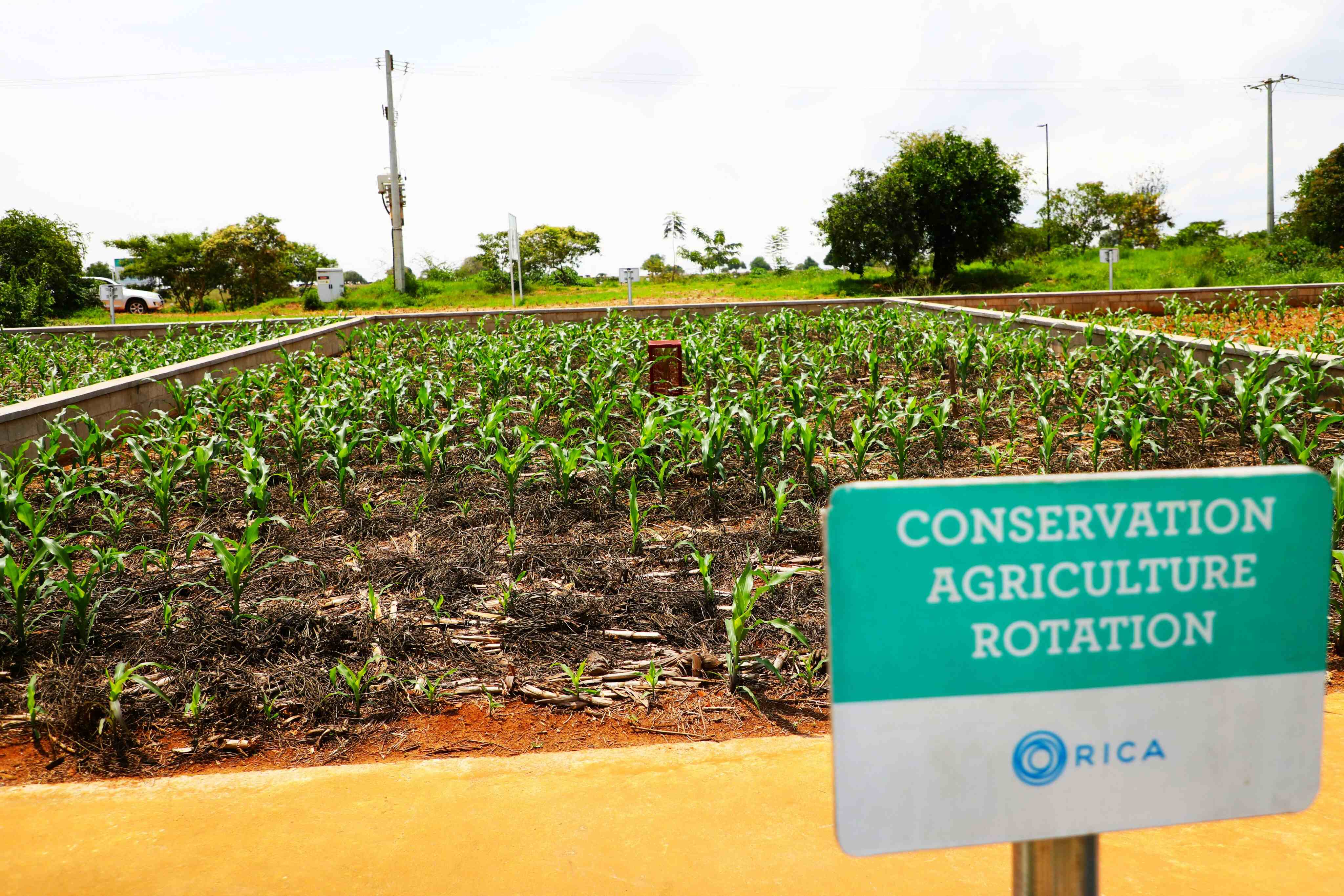
To build climate-resilient farming systems and protect Rwanda’s fragile soils, conservation agriculture is emerging as a best practice that not only safeguards the environment but also enhances productivity and food security.
Conservation agriculture is an approach to sustainable farming that promotes minimal soil disturbance, permanent soil cover, and crop diversification. These three principles work together to restore soil health, retain water, and prevent erosion—key challenges faced by farmers, particularly in hilly districts prone to soil degradation.
When properly applied, conservation agriculture improves soil fertility, enhances biodiversity, and increases yields over time. It also reduces the need for chemical inputs and contributes to lowering greenhouse gas emissions from the agricultural sector.
Recognizing these benefits, the Rwanda Environment Management Authority (REMA), through its Climate-Proofing Project (LDCF3), recently organized a study tour for agronomists from Kirehe and Gakenke districts at the Rwanda Institute for Conservation Agriculture (RICA) in Bugesera District.

The visit aimed to expose agronomists to practical demonstrations of conservation agriculture technologies and practices. Participants observed how farmers can maintain soil productivity through minimum tillage, the use of cover crops, mulching, and crop rotation.
Speaking during the visit, Dr. Magnifique Ndambe Nzaramba, the Deputy Vice Chancellor for Extension and Applied Research at the Rwanda Institute for Conservation Agriculture (RICA), highlighted the effectiveness of conservation agriculture in controlling soil erosion and increasing productivity.
“Conservation agriculture is a science-based practice that works with nature rather than against it. By keeping the soil covered and minimizing disturbance, farmers significantly reduce erosion while improving soil structure and fertility—leading to higher and more stable yields,” Dr. Ndambe explained.

Charles Sindayigaya, the LDCF3 Project Manager, noted that the study tour was organized to enhance agronomists’ understanding of conservation agriculture so that they can extend this knowledge to farmers in their respective districts.
“We wanted agronomists to witness firsthand how conservation agriculture is implemented and how it benefits farmers. The goal is for them to take back these lessons and help farmers adopt these practices, making their agriculture systems more resilient to climate change,” Sindayigaya said.
Through the LDCF3 Project, agronomists are now better equipped with knowledge and practical skills to guide farmers in adopting conservation agriculture. By doing so, they will help reduce soil erosion, boost productivity, and promote sustainable land management practices that contribute to climate adaptation and food security.
Ultimately, the widespread adoption of conservation agriculture will play a critical role in achieving Rwanda’s national targets for sustainable agriculture, environmental protection, and climate resilience.