Rwanda Marks World Ozone Day with Roundtable on Climate and Nature Finance Strategy
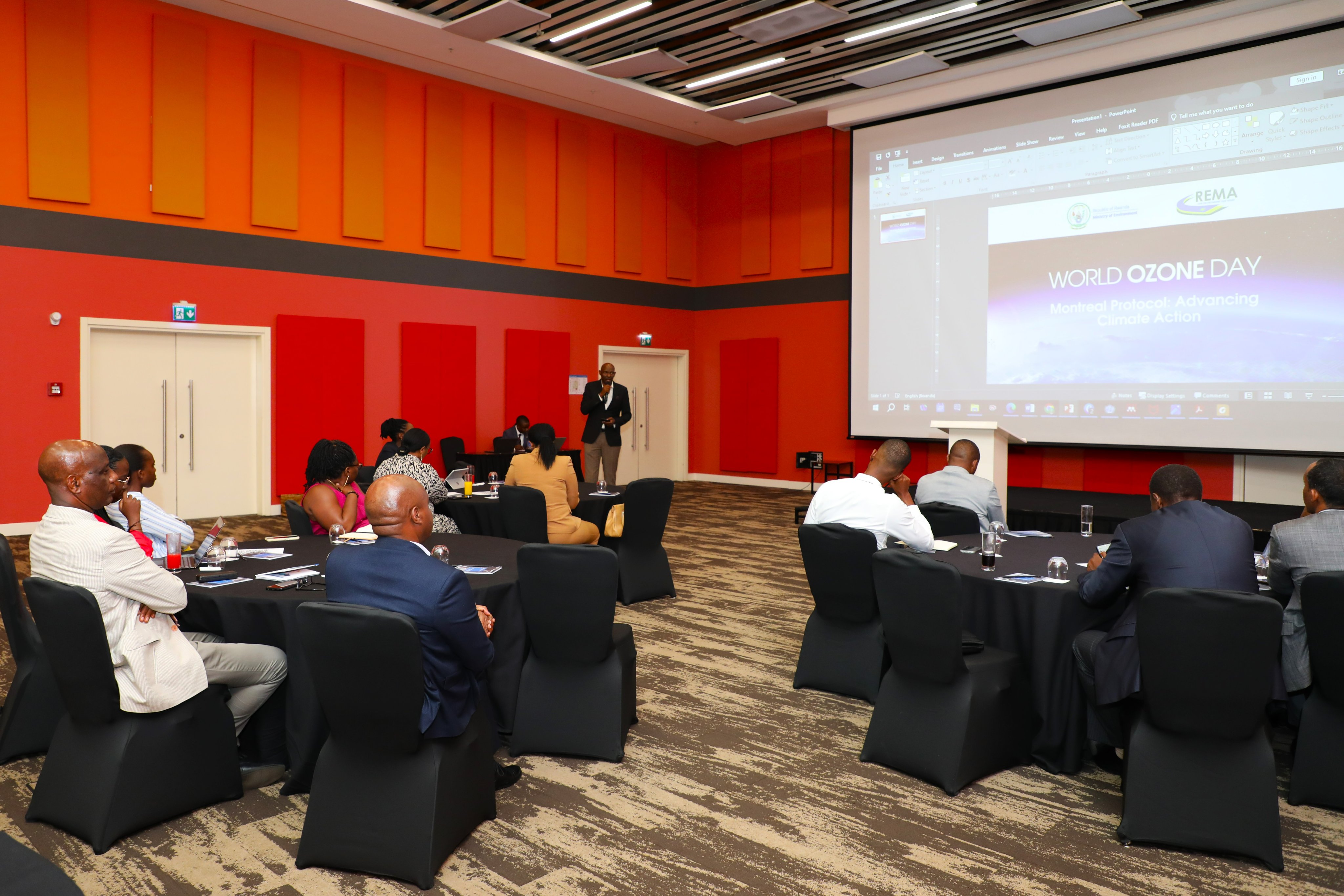
On 16th September 2024, Rwanda joined the rest of the world to mark World Ozone Day, celebrating the 37th anniversary of the Montreal Protocol under the theme “Montreal Protocol: Advancing Climate Action.” The day was highlighted by a high-level roundtable discussion on Rwanda’s Climate and Nature Finance Strategy, during which key achievements and data on greenhouse gas emissions, climate projections, and the country’s vulnerability index were presented.
The event brought together government officials, and key stakeholders to reflect on the country's progress in protecting the ozone layer and combating climate change. The Minister of Environment, Dr. Valentine Uwamariya emphasized the nation’s commitment to integrating environmental sustainability into every facet of its national development agenda.
As a signatory to the Montreal Protocol, Rwanda has long been a proactive player in global efforts to protect the ozone layer and mitigate the impacts of climate change. Minister Uwamariya highlighted the significance of this year’s theme, which calls for the integration of climate action into all aspects of national planning. “This celebration reminds us of our shared responsibility to incorporate environmental considerations into our plans and actions, advancing climate initiatives at every level,” she said.
Over the past three decades, Rwanda has implemented a series of restoration activities, policies, and laws aimed at driving sustainable development and climate resilience. Yet, as the Minister pointed out, the journey toward a fully climate-resilient Rwanda is far from over. "The road ahead remains long, and today’s gathering offers us the opportunity to assess our progress and identify ways to seize opportunities to inform our institutional and national plans."
Rwanda has set an ambitious target of reducing its greenhouse gas emissions by 38% by 2030, a goal that requires a collective effort from both the public and private sectors. Minister Uwamariya stressed the need for data-driven strategies to inform Rwanda’s National Strategy for Transformation (NST2), calling for environmental sustainability to be at the core of the country’s plans for future generations. “Our institutional and national strategies should be driven by climate data, which will guide our efforts in developing and implementing the NST2,” she explained.
The roundtable discussion served as a platform for stakeholders to share experiences, challenges, and solutions to advancing climate action in Rwanda. It also emphasized the importance of focusing on the most polluting sectors and building resilience in Rwanda’s most vulnerable districts. “It is essential that we prioritize the most polluting sectors to mitigate the impacts of climate change, while building resilience in the most vulnerable districts,” Minister Uwamariya said.
As Rwanda continues to lead by example in the fight against climate change, the nation remains committed to fulfilling its obligations under the Montreal Protocol while pursuing its broader climate resilience and environmental sustainability goals.