Rwanda Marks National Clean Air Day with Call for Collective Action
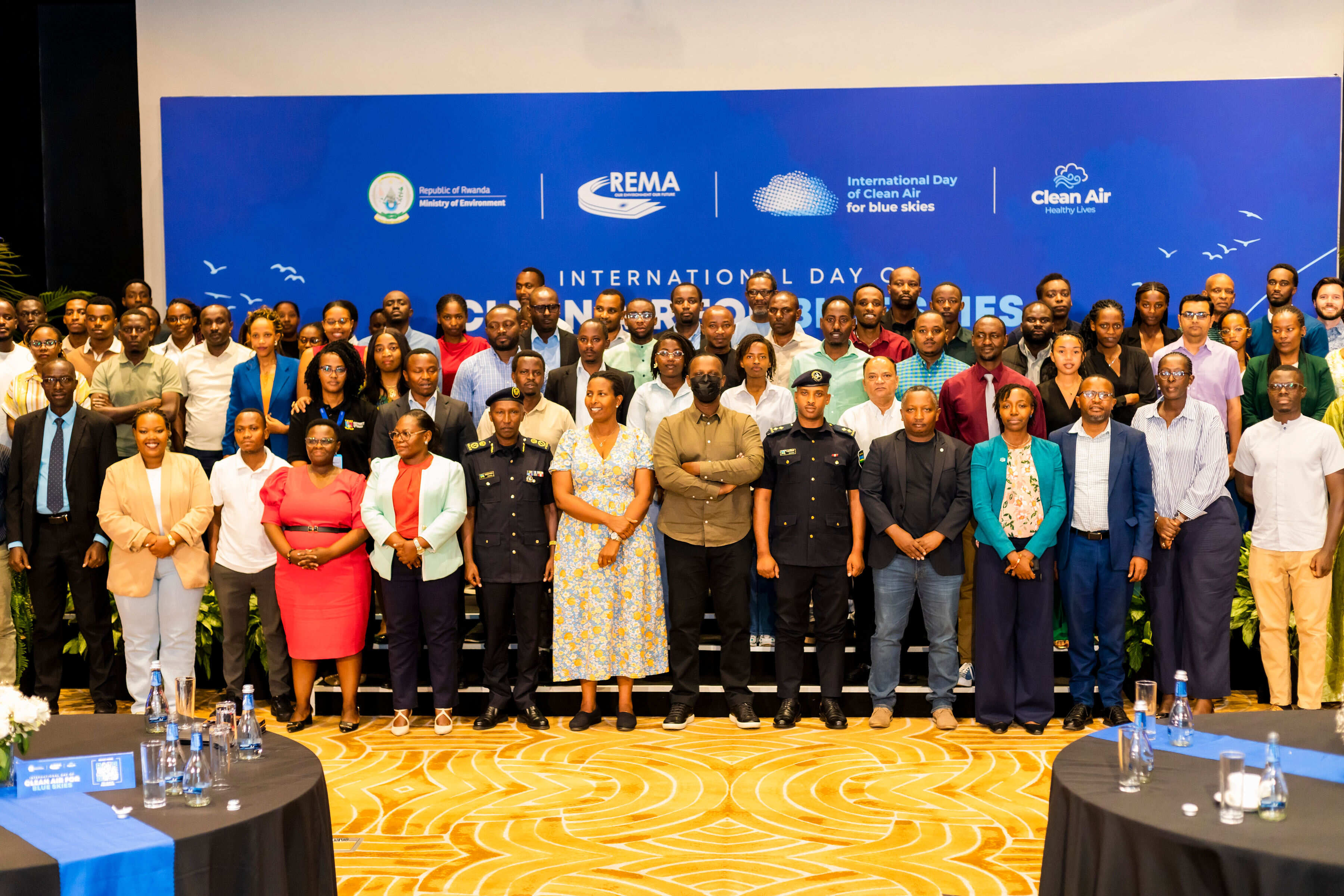
Rwanda has reaffirmed its commitment to improving air quality and protecting public health as the country marked the national celebration of the International Day of Clean Air for Blue Skies, under the theme “Clean Air for Health, Prosperity and a Sustainable Future.”
The event, held in Kigali, brought together representatives from government, academia, the private sector, the health sector and other stakeholders to discuss progress, challenges and practical solutions for improving air quality in Rwanda.
The national celebration followed the global observance of the International Day of Clean Air for Blue Skies on 7 September.
Speaking at the event, Fidèle Bingwa, Permanent Secretary in the Ministry of Environment, emphasised that achieving cleaner air requires collective responsibility and stronger collaboration among different stakeholders.
“Having clean air is a shared goal. The conversation should now be about how we achieve it, through collective action, stronger partnerships and practical solutions that improve air quality and protect people’s health,” he said.
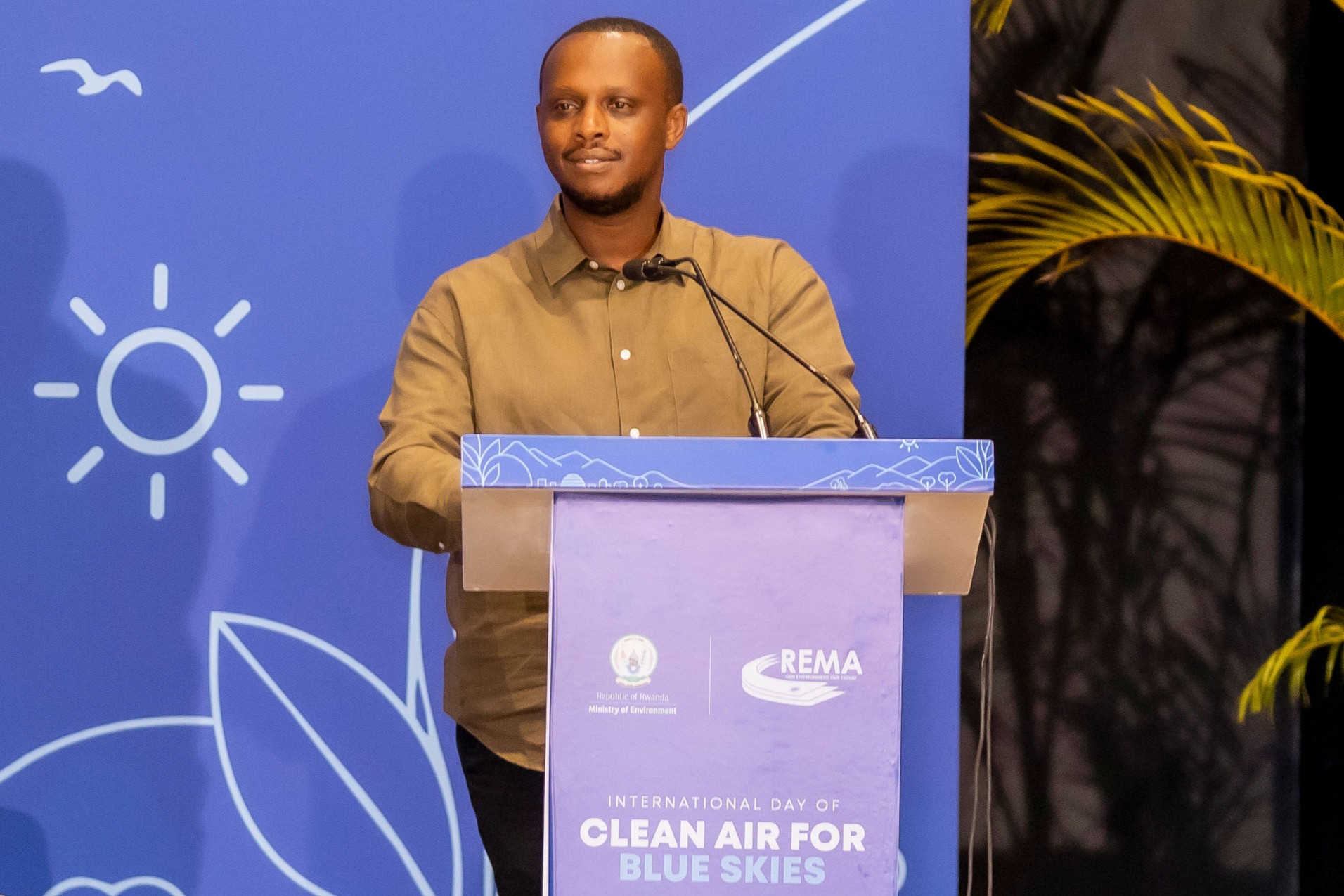
Fidèle Bingwa, Permanent Secretary at the Ministry of Environment
Bingwa noted that Rwanda still has significant room to improve its air quality, stressing that progress will require practical and achievable targets implemented progressively.
“At the moment, if you look at our air quality, I think we need to improve it. The air needs to be cleaner by maybe three or four times,” Bingwa said.
He added: “We’re not going to get there today, but we’ll get there slowly.”
Strengthening air-quality monitoring
Rwanda is strengthening its air-quality monitoring systems to generate reliable data that can guide interventions, inform standards and support evidence-based environmental management.
“We already have an air quality monitoring system that we’re trying to improve,” Bingwa said. “You don’t want to regulate people without facts, so you need to measure.”
The country currently has 23 air-quality monitoring stations that measure pollutants including fine particulate matter such as PM2.5 and PM10, nitrogen dioxide, sulfur dioxide, ozone and carbon monoxide.
The monitoring system provides regularly updated information on air quality, which is also made available to the public through digital platforms, allowing people to check air-quality conditions in their areas.
The data collected is helping authorities identify pollution hotspots, understand major sources of emissions and determine where interventions are most needed.
Addressing emissions from transport
Transport remains an important area of focus in Rwanda’s efforts to reduce air pollution.
The country has strengthened vehicle emissions testing to ensure that vehicles operating on its roads meet established emissions standards. The requirements have also been extended to motorcycles, which represent a significant share of the vehicles on Rwanda’s roads.
At the same time, Rwanda is promoting cleaner mobility options, including public transport, walking, cycling and electric mobility.
“We need to encourage people to buy electric vehicles. We need to encourage people to take buses. We need to improve our public transportation,” Bingwa said.
REMA is also encouraging vehicle owners to properly maintain their vehicles, use public transport where possible, and consider walking and cycling as alternatives for shorter journeys.
Promoting cleaner cooking and responsible production
Efforts to improve air quality extend beyond the transport sector. Domestic fuel use, particularly the burning of wood and charcoal for cooking, remains an important source of air pollution.
Rwanda is therefore promoting cleaner cooking solutions and more efficient technologies, including electricity, gas and other cleaner fuels.
Industrial activities, construction, mining and quarrying can also contribute to air pollution through emissions and dust. Open burning of waste and agricultural residues is another source of pollution that requires attention.
The Government is working with industries to strengthen emissions monitoring and encourage companies to take greater responsibility for understanding and managing their environmental performance.
Bingwa said industries could generate their own emissions data, which can then be compared with measurements taken through government inspections. This approach would strengthen evidence-based enforcement while ensuring that environmental requirements remain practical and achievable.
“We’re not asking for the impossible. We’re asking for things that are practical, but that we know it will slowly and slowly get us to where we want,” Bingwa said.
He emphasised that improving air quality is a progressive process requiring continuous assessment and the setting of successive targets.
“You set a goal. You try to achieve that goal, and then you set another goal. You try to achieve that goal, and that’s what we’re trying to do.”
Clean air is essential for public health
The Director General of the Rwanda Environment Management Authority (REMA), Juliet Kabera, emphasised that clean air is not only an environmental concern but also a fundamental public health and development issue.
Reflecting on the COVID-19 pandemic, Kabera highlighted the importance of breathing clean air and protecting people from the health impacts of air pollution.
“Breathing clean air is of utmost importance,” she said.
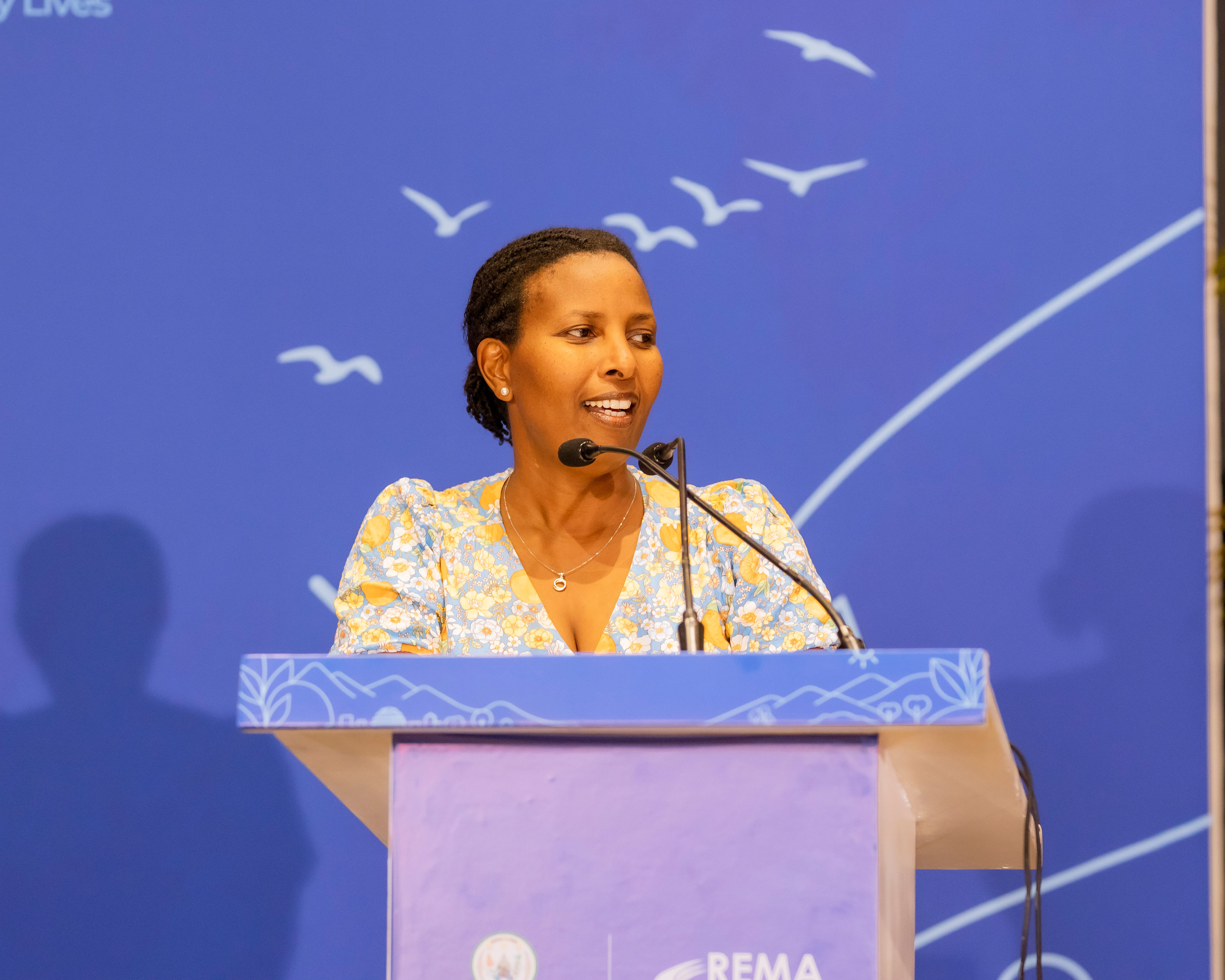
Juliet Kabera, Director General, Rwanda Environment Management Authority
She further underscored the particular importance of protecting children from exposure to air pollution, noting the potential impacts of poor air quality on their development and wellbeing.
“We all want to breathe clean air. We all want our kids to breathe clean air. It’s not a luxury. It’s a right,” Kabera said.
Kabera called for collective action from government, the private sector, communities and individuals to protect air quality and safeguard the health of present and future generations.
From awareness to action
The national celebration also provided a platform for dialogue on sustainable industrial development, improved emissions management and the behavioural changes required to address air pollution.
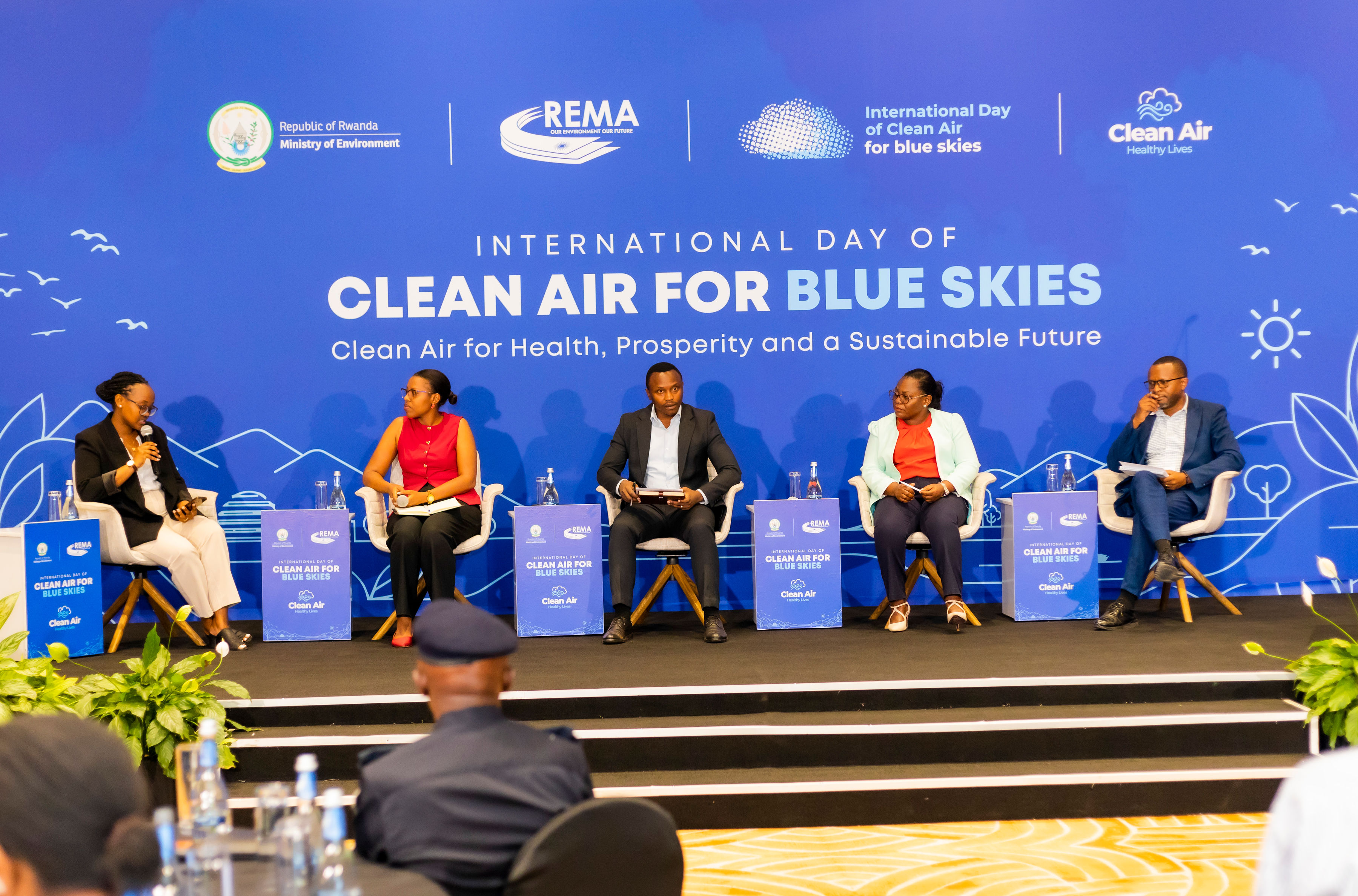
During a panel discussion on industrial performance and emissions management, participants highlighted the importance of combining technological solutions with changes in attitudes and practices.
“The main source of air pollution is the mindset,” said Dr Joseph Ndakize Sebaziga.
Industry representatives also highlighted the potential for cleaner production practices and technologies to reduce emissions.
Mehul Brahmbhatt, CEO of Imana Steel Rwanda Ltd, noted that cleaner industrial production is achievable, saying: “The chimney can run without smoke; the car can move without smoke.”
REMA continues to encourage the public to contribute to cleaner air through practical actions, including properly maintaining vehicles, using public transport, walking or cycling where possible, considering cleaner mobility options, adopting cleaner cooking technologies and avoiding the open burning of waste and agricultural residues.
The protection of trees, wetlands and green spaces also remains important in supporting healthier and more resilient communities.
As Rwanda continues to strengthen air-quality monitoring, emissions management, cleaner transport and public awareness, the focus is on translating data, policies and partnerships into sustained improvements in the quality of the air people breathe.
The journey towards cleaner air will require continued action from all sectors of society. Through collective responsibility, stronger partnerships and practical solutions, Rwanda is working towards healthier communities, a more productive population and a sustainable future.
View more photos of the Clean Air Day celebration here