Local Government Stakeholders Meet to Contribute to Rwanda’s Enhanced Climate Action Plan
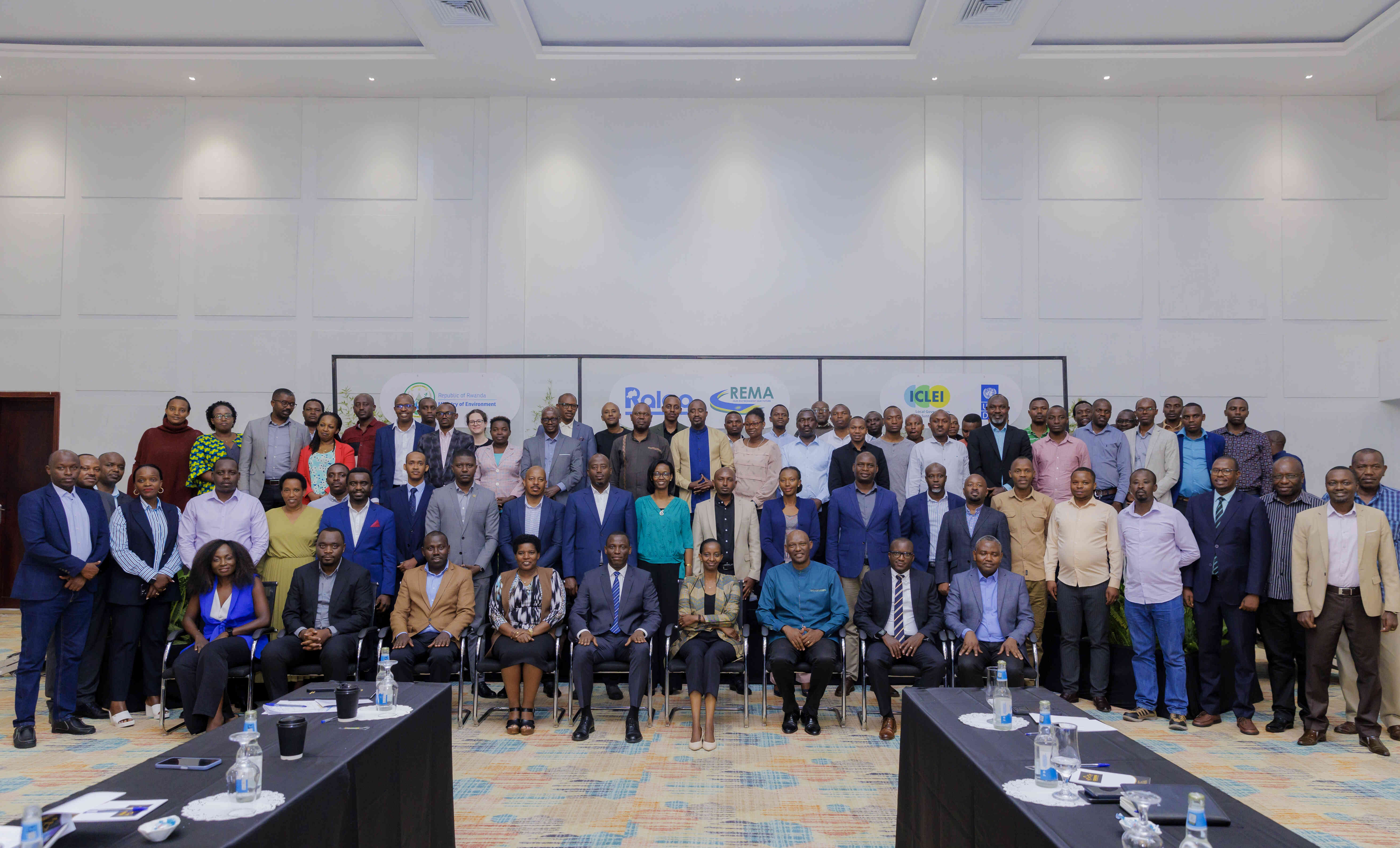
Local government representatives, policymakers, and climate experts have gathered for a two-day consultation workshop to share insights and perspectives as Rwanda develops its enhanced Climate Action Plan, known as the NDC 3.0. The workshop discussed climate adaptation and mitigation priorities, and the role of local government in meeting Rwanda’s national and international climate targets.
Organised by the Rwanda Environment Management Authority (REMA) through the Ministry of Environment in collaboration with Rwanda Association of Local Government Authorities (RALGA), ICLEI and United Nations Development Programme (UNDP), the workshop focused on gathering inputs to shape Rwanda’s NDC 3.0. The event emphasised the role of local governments in climate action and their responsibility in implementing sustainable solutions at the grassroots level.
The workshop opened with remarks from Dominique Habimana, Secretary General of RALGA, who emphasised the role of local governments in achieving Rwanda’s climate goals.
“Local government is on the front lines of climate action and must be empowered with skills and resources. Rwanda’s journey towards climate resilience is commendable and should be encouraged,” he said.
Beatrice Cyiza, Permanent Secretary at the Ministry of Environment, spoke of the urgency of climate action and the need for proactive, community-centered solutions.
“This is a call for us to see in our communities the activities that affect climate change. Remember, the community is always at the heart. This consultation is a platform for us as policymakers to contribute to both local and global climate action. Climate change doesn’t wait for us, we need to think about what we can do within our means to build climate resilience,” she said.
Faustin Munyazikwiye, Deputy Director General at REMA, also reiterated the importance of ambition and practicality in Rwanda’s updated NDC.
“In this NDC 3.0 revision workshop, we are expecting to develop targets that are ambitious, reasonable, achievable, and backed by science. Local government is at the forefront of implementation,” he said.
The first day focused on assessing Rwanda’s progress under the previous NDC and identifying areas that need strengthening. Presentations covered strategies for climate adaptation and mitigation, with a focus on ensuring that local governments are equipped with the necessary skills, resources, and knowledge to drive climate action.
Participants also engaged in group discussions, exchanging ideas on how to enhance climate policies at the district level. One key takeaway was that adaptation measures currently receive more attention than mitigation interventions. Experts emphasised the need to strike a balance between the two to optimise climate finance opportunities and ensure comprehensive, effective action.
The second day featured a panel discussion on “Multilevel Partnerships and the Role of Local Governments in Realizing NDC 3.0”. Panelists shared insights on collaborative climate action, emphasising the need for clear communication and inclusive engagement to ensure that climate policies are well understood and effectively implemented.
The discussion highlighted the need for private sector engagement, as Rwanda aspires to become a middle-income country by 2035. Public-private partnerships were also identified as drivers to mobilise investments for green initiatives, sustainable infrastructure, and climate-smart business practices.
“Achieving NDC 3.0 targets requires meaningful community engagement at every step of the journey,” Jean Marie Rusilibana, Vice Mayor in charge of Economic Development in Ruhango District said as he underscored the importance of community engagement.
Discussions also centred on how best to communicate climate policies and solutions to citizens. Panelists emphasised the need to move away from technical jargon and use simple, practical language that resonates with local communities - an approach to ensure that climate action is inclusive and that citizens understand their role in implementation.
Parfaite Uwera, Vice Mayor in Charge of Economic Development in Gicumbi District, highlighted the success of local climate focused projects:
“The Green Gicumbi project has equipped citizens to embrace climate action, transforming their livelihoods. Providing support is key to sustainable resilience and economic growth,” she said.
Jean Rubangutsangabo, Director General of Urban Development at the City of Kigali, elaborated on how urban planning contributes to emissions reduction.
“We follow the master plan to guide land use, engage communities in sustainable building, and promote eco-friendly transport, including bicycle lanes and public transit, to reduce emissions,” he said.
Emilie K. Uwase, Climate Finance Analyst at the Rwanda Green Fund, emphasised that to maximise the impact of green projects, capacity building should be prioritised, ensuring stakeholders have the knowledge and skills needed for effective implementation.”
Additionally, the panel acknowledged that while global best practices are useful, local adaptation of climate solutions is necessary for effective impact.
Meembo Changula, Senior Professional Officer - Urban Planning, at ICLEI Africa, said: “While shared lessons are valuable, there is a need to tailor climate solutions to local contexts for effective impact.”
Participants also explored the alignment of NDC 3.0 with upcoming District Development Strategies (DDS). Ensuring that climate objectives are integrated into district-level planning was seen as crucial for successful implementation of Rwanda’s new Climate Action Plan.
As the workshop concluded, participants reaffirmed their commitment to advancing Rwanda’s climate resilience efforts. They acknowledged the progress made while recognising that continued collaboration, resource mobilisation, and strategic planning will be essential in successfully implementing the country’s NDC 3.0.
The insights and recommendations gathered will play a crucial role in refining Rwanda’s climate policies. The next step will involve developing implementation strategies, validating the final NDC 3.0 framework, and ensuring that all stakeholders, including local governments, remain actively engaged in the process.
The two-day consultation workshop demonstrated that local governments have a central role in driving Rwanda’s climate agenda. Strengthening capacity, enhancing coordination, and ensuring financial sustainability will be key to achieving Rwanda’s ambitious climate goals.
Rwanda is developing its new Climate Action Plan (NDC 3.0) with support from the World Bank and other development partners including UNDP, FAO, WFP, GIZ, WHO, GGGI, UNFPA, CCAC, UNICEF, IFAD, UN Women, IoM, and ILO.