How Imidugudu Are Becoming One-Stop Centres for Better Livelihoods and Climate Resilience
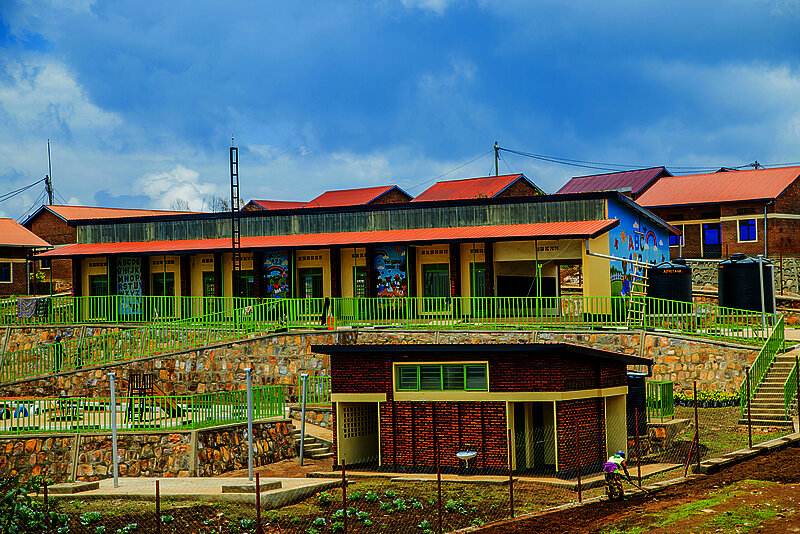
In Rwanda’s Gakenke and Kirehe Districts, the establishment of rural settlements known as imidugudu is creating opportunities to improve livelihoods, bring essential services closer to communities and strengthen resilience to climate change. Developed under the Rwanda Environment Management Authority (REMA)’s project entitled Ecosystem/Landscape Approach to Climate Proof the Rural Settlement Programme of Rwanda, also known as LDCF3, these settlements are designed to go beyond providing housing by integrating complementary services and livelihood activities that support more sustainable and resilient communities.
The project is implemented in partnership with the Rwanda Housing Authority and the districts of Gakenke and Kirehe, with support from the Global Environment Facility (GEF) and the United Nations Development Programme (UNDP).
The imidugudu bring together a range of facilities and activities, including agakiriro (small-scale production and craft centres), rainwater harvesting systems, livestock breeding, Early Childhood Development (ECD) facilities and greenhouse agriculture. Together with other community development initiatives, these components provide residents with opportunities to improve household incomes, strengthen food security and access essential services closer to where they live.
Bringing Services and Opportunities Closer to Communities
One of the key features of the imidugudu is the integration of different services and economic activities within a shared settlement. This approach helps create an enabling environment where residents can access opportunities for income generation, agricultural production, childcare and other essential services without having to travel long distances.
In Muzo settlement in Gakenke District, one of the facilities under construction is an “agakiriro”. In Kirehe District, the project includes Imigongo Hub, a centre where community members will be able to sell imigongo, a distinctive Rwandan art form that reflects the country's cultural identity. The settlement also includes designated selling points intended to support local economic activities and livelihoods.
Through agakiriro, residents can engage in small-scale enterprises, craftsmanship and other productive activities that create employment and generate income. These centres also offer opportunities for local entrepreneurs to develop their skills, improve their products and contribute to the local economy.
Iragena Jean Felix, a resident of Muzo settlement in Gakenke District, is confident that the completion of the agakiriro will significantly improve community livelihoods.
“Once agakiriro is completed, we will have thousands of opportunities to improve our lives, especially for young people. We are grateful to REMA and the other partners who have supported this project, and especially to our President, H.E. Paul Kagame, for his good leadership, which is the foundation of this development,” Iragena said.
The inclusion of Early Childhood Development facilities supports young children's development while helping parents and caregivers, particularly women, balance childcare responsibilities with productive and income-generating activities.
“We are no longer worried about leaving our children at home. Since the ECD was completed, every parent brings their children to the ECD and has time to do other income-generating activities without any problems,” said Jeannette Ufitinema, a resident of Muzo settlement.
Livestock breeding provides another opportunity for households to diversify their livelihoods. When supported by appropriate animal husbandry practices and access to markets, livestock can contribute to household income, nutrition and financial security.
Promoting Climate-Smart Agriculture and Water Management
Climate change continues to pose challenges to rural communities, particularly through changing rainfall patterns, droughts and other weather-related risks that affect agricultural production and household incomes. Imidugudu respond to these challenges by incorporating practical measures that promote the efficient use of natural resources and strengthen climate resilience.
Rainwater harvesting systems provide opportunities to collect and store water for domestic and productive uses, helping communities make better use of available rainfall and manage periods of water scarcity. Their effectiveness depends on adequate storage capacity, proper maintenance and safe water management.
The Greenhouse agriculture under construction will also create opportunities for more controlled crop production, allowing farmers to manage growing conditions and potentially improve productivity while using water and available land more efficiently. Combined with appropriate agricultural practices, this approach can help diversify food production and create additional income opportunities.
These interventions demonstrate how rural settlement planning can be linked to climate change adaptation by integrating water management, agricultural production and livelihood diversification into community development.
Green Jobs Create Opportunities for Young Women
Beyond improving access to services and strengthening climate resilience, the establishment of Imidugudu in Gakenke District is creating employment opportunities for local communities, particularly young people and women. More than 600 people, including women and young people, are currently involved in the day-to-day activities associated with establishing the rural settlements and their various components.
For some young women, these jobs have become an important source of income, enabling them to acquire assets, meet their personal needs and become more financially independent.
Bayisenge Josiane, 20, and Iradukunda Sandrine, 18, have been involved in the settlement activities for one year and one and a half years, respectively. Both say that the employment opportunities provided by the project have helped them improve their livelihoods and invest in small livestock.
“Being given a job by this project has been beneficial to me. I have been able to buy small livestock, including pigs and sheep, and now I can solve my own problems without waiting for anyone’s support,” Bayisenge said.
For Iradukunda, earning a regular salary has enabled her to meet her personal needs while investing in livestock to improve her economic situation.
“Young girls usually have many needs. We often need clothes, lotions and pocket money to meet our personal needs. I receive my salary regularly, which has enabled me to buy livestock that is helping me get out of poverty,” Iradukunda said.
The income generated through these jobs is also helping young women strengthen their financial independence and make decisions about their lives with greater confidence. Uwineza Yvonne, 19, says that earning her own income has reduced her vulnerability to men who may exploit financial difficulties to pressure young women into sexual relationships.
“No man can deceive me and ruin my life because I can buy everything I need thanks to the job I got from the project. No man can drag me into sexual abuse; I can solve my financial problems myself,” Uwineza said.
She encouraged other young women not to overlook the employment opportunities created through the project, describing them as an opportunity to empower themselves and improve their lives.
The experiences of these young women illustrate how employment linked to climate-resilient rural development can deliver benefits beyond income generation. By enabling young women to earn wages, acquire productive assets such as livestock and meet their needs independently, the project is contributing to their economic empowerment while supporting broader community development.
Building Resilient Communities Through Integrated Development
The Imidugudu supported by the LDCF3 Project reflect an integrated approach to rural development in which housing, essential services, economic opportunities and climate adaptation reinforce one another.
By bringing together different facilities and livelihood activities, the settlements provide a foundation for communities to diversify their sources of income, strengthen food security and reduce their vulnerability to climate-related shocks. The approach also creates opportunities for cooperation among residents, local authorities and other development partners in managing shared facilities and sustaining the benefits of these investments.
However, the long-term success of the settlements will depend on how effectively residents manage, maintain and use the facilities. The project has put in place continued capacity-building, access to markets, technical support for farmers and entrepreneurs, and community participation to ensure that the available infrastructure translates into lasting improvements in livelihoods.
A Model for Sustainable and Climate-Resilient Rural Development
The experience in Gakenke and Kirehe Districts highlights the potential of integrated rural settlements to serve as more than places of residence. By combining livelihood development, social services, employment opportunities and climate-smart interventions, the imidugudu supported by the LDCF3 Project offer a practical approach to building communities that are better equipped to respond to environmental and economic challenges.
As Rwanda continues to advance climate-resilient development, such initiatives demonstrate the importance of placing communities at the centre of adaptation efforts and ensuring that infrastructure investments are accompanied by opportunities for economic empowerment and sustainable resource management.
Ultimately, the value of these settlements will be measured not only by the facilities established but also by the extent to which they improve people's lives, create sustainable livelihood opportunities and strengthen communities' ability to withstand the impacts of climate change.
View more photos of Muzo rural settlement in Gakenke District here.