How GEF’s Support is Transforming Rwanda's Environmental Recovery and Sustainability
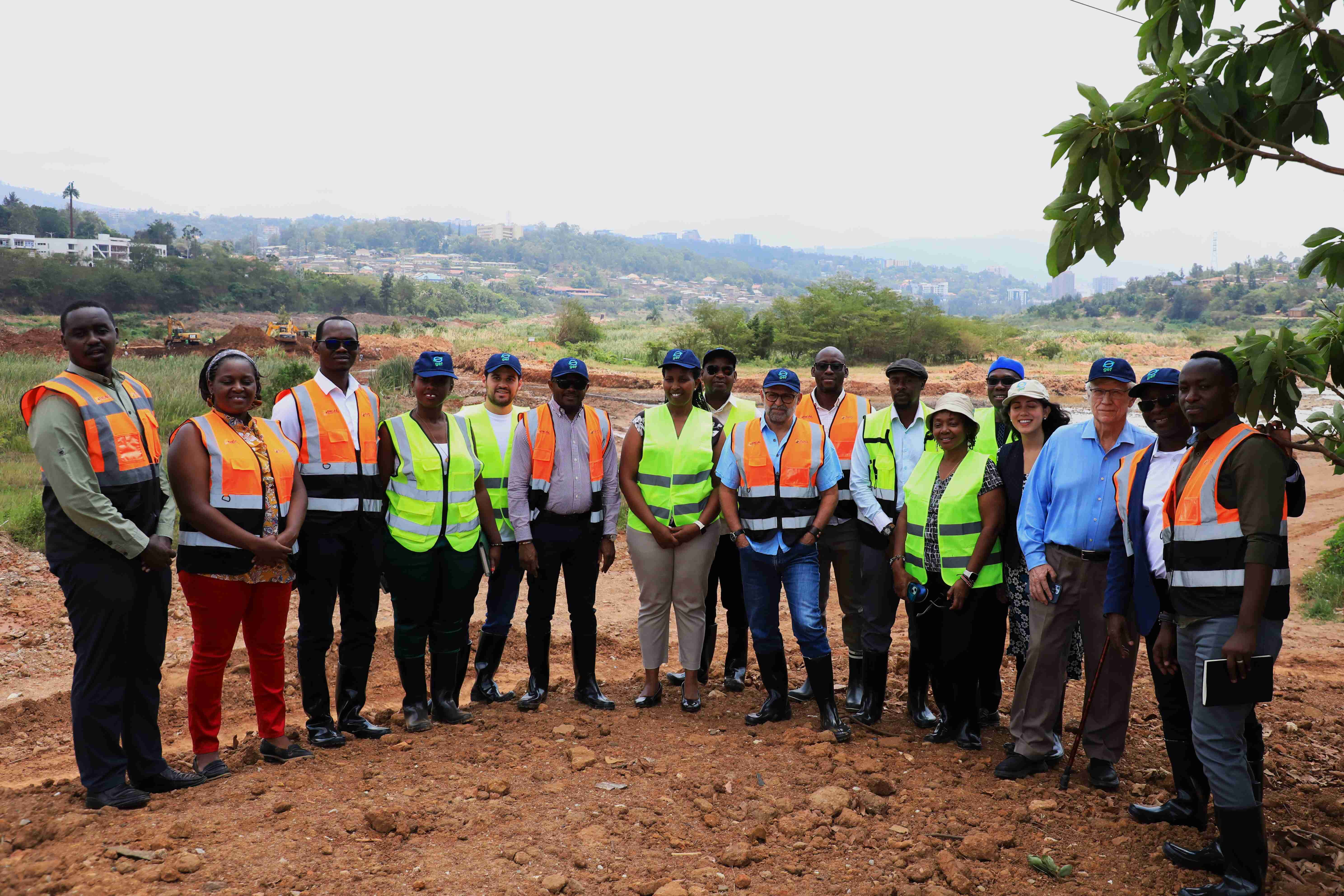
After the CEO of the Global Environment Facility (GEF), Carlos Manuel Rodriguez, visited Rwanda in early September 2024 to discuss conservation and climate change strategies with government officials, Juliet Kabera, the Director General of the Rwanda Environment Management Authority (REMA), shared that Rwanda began its first project with GEF in 2006 and has maintained a strong partnership since.
GEF has consistently funded ecological restoration projects in Rwanda, helping to address environmental damage that occurred after the 1994 Genocide against the Tutsi.
Juliet highlighted the significance of this support, noting that without it, Rwanda could have become a desert due to severe environmental degradation following the return of Rwandans after the genocide.
She pointed out the Green Amayaga region project as a key collaboration with GEF, which provided resources to combat biodiversity loss in southern Rwanda. This project included efforts for erosion control, planting agroforestry trees, and rehabilitating forests in protected areas.
Juliet also mentioned that Rwanda and GEF work together on projects related to livestock, which provide livelihoods and nutrition support, as well as relocating people from flood-prone areas to safer environments. These initiatives improve housing and protect natural areas, ensuring a safer environment for everyone involved.
GEF provides grants and funding to developing and transitioning economies for projects related to biodiversity, climate change, land degradation, international waters, and waste management. It collaborates with partner agencies like the United Nations Development Programme (UNDP), the United Nations Environment Programme (UNEP), and the World Bank to fund projects that align with global environmental goals and national priorities, involving governments, civil society, and the private sector for sustainable outcomes.
Juliet expressed her appreciation for the delegation of nine people visiting Rwanda, led by the CEO, to support the Rwanda Green Agenda. She noted that projects like the Gishwati-Mukura National Park contribute directly to tourism and the economy while also enhancing soil productivity and addressing biodiversity loss in agriculture.
She stated, “The project directly contributes to the tourism sector, which boosts the GDP. We are also working to improve soil productivity in agriculture, which has suffered due to biodiversity loss. So, the benefits can be seen in various areas.”
Juliet announced the rehabilitation of four wetlands in Kigali: Gikondo, Kibumba, Rugenge-Rwintare, and Nyabugogo, aimed at boosting tourism and improving the local community's well-being, primarily funded by GEF.
She explained, “We did this in Nyandungu Park, which was our first project of this kind. We shared the lessons learned with GEF, and they are pleased to fund the next four wetlands, with additional partners joining the initiative.”
The GEF CEO’s visit highlights Rwanda’s strong partnership with GEF, promoting environmental conservation, ecosystem restoration, climate resilience, and sustainable land management.
Key projects include LAFREC, which restored the degraded Gishwati and Mukura forests before they became a national park and UNESCO Biosphere reserve; the Green Amayaga project, which restores ecosystems and addresses climate change in the Amayaga region; the NAP Project, which builds Rwanda’s capacity for climate change adaptation; the Decoupling Hazardous Waste Generation Project, which aims to improve hazardous waste management; and the LDCF3 Project, which enhances resilience to climate change through ecosystem restoration. Together, these projects demonstrate the tangible benefits of this partnership.
To support these initiatives, GEF has provided a total of $44,099,176 in funding.
The GEF CEO’s visit also presents an opportunity to highlight the upcoming Ecosystem-Based Restoration Approach for the Nyungwe-Ruhango Corridor project under GEF. This $10.15 million initiative, set to be implemented in the Ruhango, Nyanza, and Nyamagabe districts, aims to restore degraded ecosystems and promote various environmental and socioeconomic benefits through integrated sustainable landscape management.