GEF Approves $9 Million Grant to Restore Ecosystems and Strengthen Climate Resilience in the Nyungwe–Ruhango Corridor
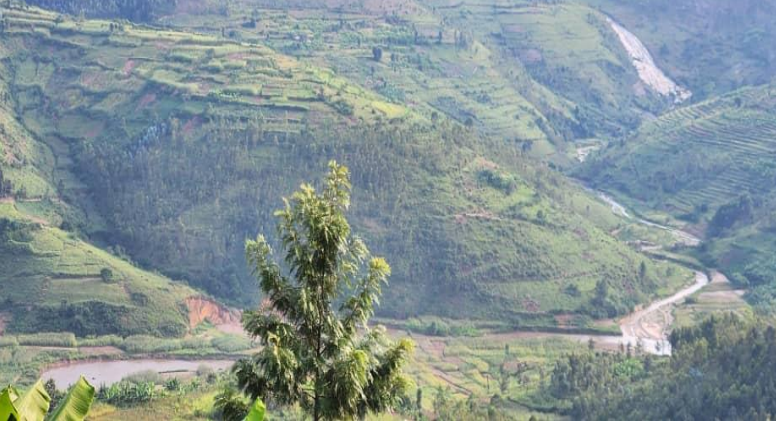
The Rwanda Environment Management Authority (REMA) is set to implement a new project aimed at restoring degraded ecosystems and enhancing climate resilience in Rwanda’s Southern Province, thanks to a newly approved $9 million grant from the Global Environment Facility (GEF).
The Ecosystem-Based Restoration Approach for the Nyungwe–Ruhango Corridor Project will focus on integrated landscape restoration and climate-smart land management practices across Nyamagabe, Nyanza, and Ruhango districts. This initiative builds on the success of the Green Amayaga Project, which is also being implemented by REMA to rehabilitate degraded ecosystems in the Amayaga region.
The Green Amayaga Project has already achieved significant results by restoring degraded landscapes through agroforestry, the planting of new forests, the protection of the Kibirizi–Muyira natural forest, and the implementation of livelihood-enhancing initiatives for local communities.
“We are deeply grateful to the Global Environment Facility for this new support,” said Juliet Kabera, Director General of REMA. “This project allows us to build on the momentum created by the Green Amayaga Project and expand our efforts to restore ecosystems and protect biodiversity. Restoring degraded ecosystems is not just about protecting nature—it’s about securing livelihoods, building resilience to climate change, and creating a better, more sustainable future for all.”
“We also appreciate the World Bank for the technical support provided throughout the development of this project, which has been critical in shaping its ambition and design” Kabera added.
The project implementation is expected to kick off in August 2025.
Under this project, Rwanda will rehabilitate 2,162 hectares of forests and wetlands, promote sustainable land management practices across 8,931 hectares of farmland, and support the development of income-generating activities that reduce pressure on natural resources. The project is expected to directly benefit more than 289,000 people in the targeted districts.
Using a landscape-based approach, the project will address critical environmental challenges such as land degradation, food insecurity, and climate-related disasters, including floods and landslides, which threaten infrastructure, agricultural production, and community well-being in the Southern Province.
At its core, the Rwanda GEF-8 project seeks to restore ecosystems that provide essential services such as erosion control, flood mitigation, and biodiversity conservation. Key interventions will include afforestation, reforestation, riverbank and wetland rehabilitation, as well as the promotion of agroforestry and other climate-smart agricultural practices.