Empowering Communities: Women and Youth Find Economic Opportunities in the construction of Model Villages
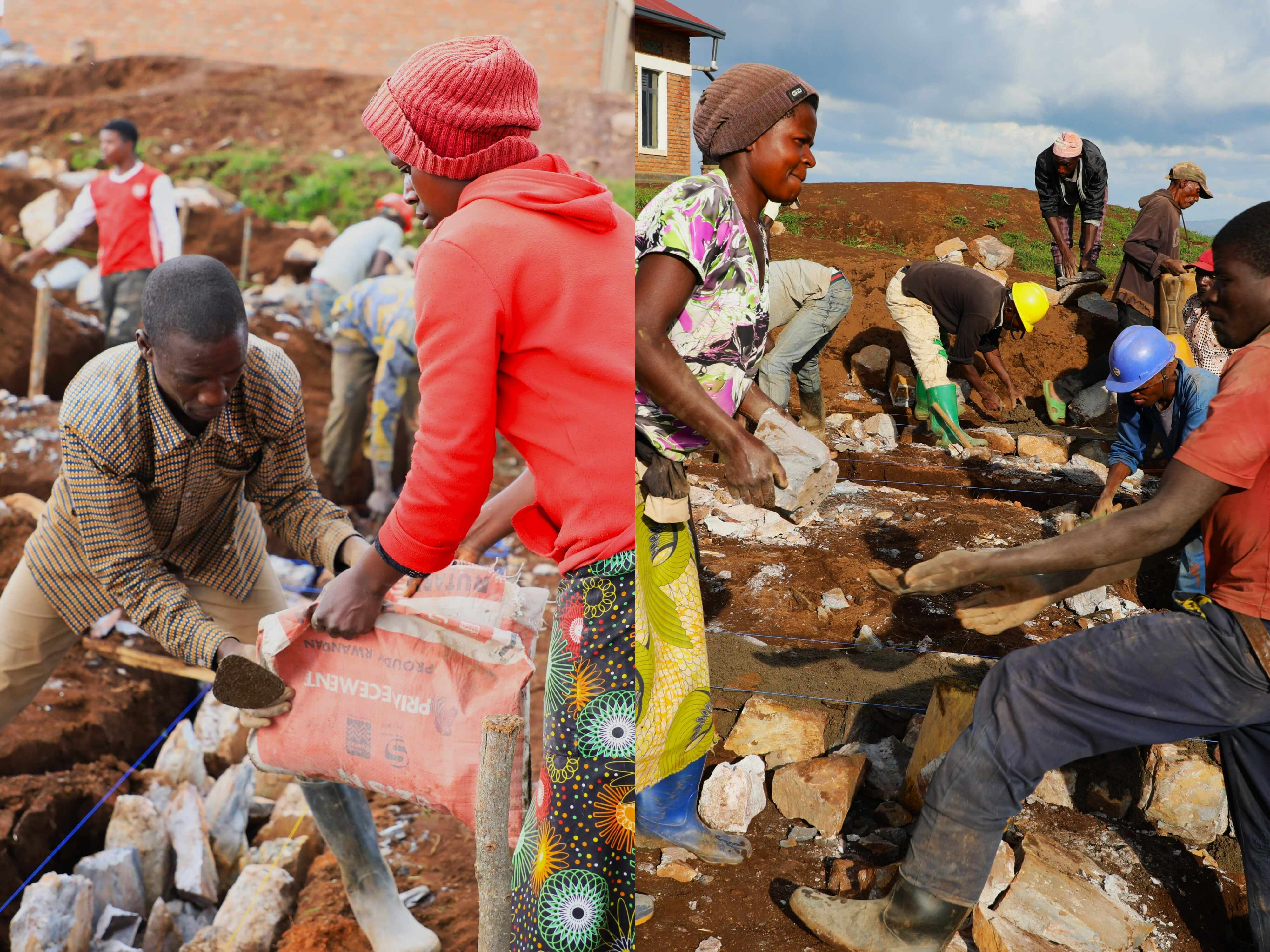
The construction of Integrated Development Program (IDP) model villages under the Rwanda Environment Management Authority (REMA)'s Landscape Restoration Approach to Climate Proof the Rural Settlement Project is not only building resilient communities but also providing economic opportunities for communities especially women and youth.
Empowering Communities through Employment
The IDP model villages, part of a strategic initiative to relocate residents from high-risk areas to climate-proofed settlements, have opened up various job opportunities for local communities. These roles range from construction labor to more specialized tasks, providing much-needed income and skill development for many.
By employing local residents in the construction process, the project is empowering communities and contributing to their livelihoods.
Women, who often face limited employment opportunities, are playing a pivotal role in the construction of these model villages. Through involvement in various tasks such construction, and site cleaning, they are gaining valuable skills and generating income.
For many women and young people, the wages earned from these construction jobs represent more than just financial gain. They signify a step towards economic independence and self-reliance. The consistent income helps families improve their living conditions, access better healthcare, and invest in education, breaking the cycle of poverty.
"This project has changed my life," said Twizerimana Angelique, a resident of Muzo Sector in Gakenke District. "I used to struggle to provide for my family, but now I can earn a living while contributing to the development of my community." She added.
Young people are also benefiting from the project, with many finding employment as construction workers and apprentices. These opportunities not only provide them with financial support but also equip them with valuable skills for future employment.
"Devota Mushimiyimana, a local resident, expressed her gratitude for the opportunity to work on the project. "This job has helped me to support my education and gain practical skills that will benefit me in the future," she said.
The project's emphasis on local employment aligns with Rwanda's broader development goals of poverty reduction and job creation. By investing in its people, the government is not only building resilient communities but also empowering them to thrive.
The construction of IDP model villages is transforming not only landscapes but lives. Through the provision of employment opportunities, women and young people are gaining financial independence, building skills, and securing brighter futures.
The LDCF3 Project is a five-year initiative that aims to climate-proof the rural settlements in Gakenke and Kirehe Districts by building communities’ resilience to climate change. It is implemented by REMA in partnership with Rwanda Housing Authority, Meteo Rwanda and the Districts of Gakenke and Kirehe with support from the Global Environment Facility (GEF) through the United Nations Development Programme (UNDP)